

EV CHARGER INSTALLATION
Genstar handles EV charger installation for homes and businesses. A Level 2 charger is the largest continuous load most houses ever add, which is why the job starts with a load calculation rather than a product recommendation. Your service amperage and what is already on the panel decide what your house can carry, and that answer shapes every other decision, including which charger to buy.
Electric vehicle charger installation falls under NEC Article 625, which governs the equipment, the circuit, and the disconnect. Our licensed electricians size the circuit to the charger's continuous draw, run the conduit, mount and commission the unit, pull the permit, and test under load before it goes into service.
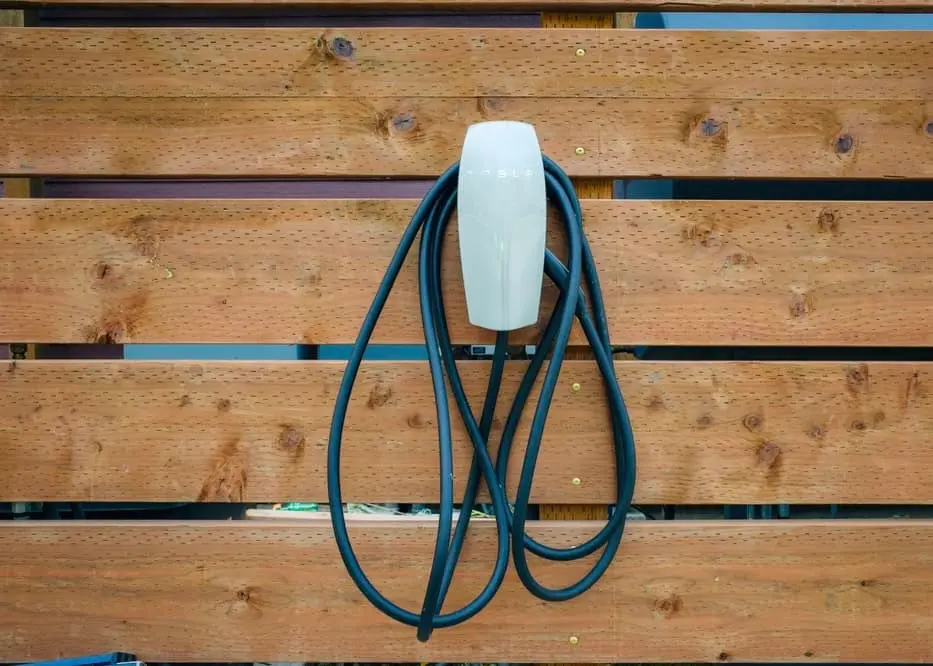
Level 1, Level 2, or Level 3? And Does a Tesla Need a Tesla Charger?
Level 1 is the cord in your trunk: 120 volts, three to five miles of range per hour, fine only for a plug-in hybrid. Level 2 at 240 volts is what nearly every EV owner installs. Level 3 DC fast charging needs three phase power and is a commercial job, not a home one.
Does a Tesla need a Tesla charger? No. Any J1772 unit works with the adapter in the car, and Tesla's Universal Wall Connector has J1772 built in. It runs the other way too: most 2025 and newer non-Tesla EVs have a native NACS port and ship with a J1772 adapter. ChargePoint, Wallbox, Emporia, Autel, Grizzl-E, and Enphase all work.
HOW TO CHOOSE THE RIGHT EV CHARGER AMPERAGE BEFORE YOU BUY THE CHARGER?
Amperage decides everything downstream. A 40 amp charger needs a 50 amp circuit. A 48 amp charger needs a 60 amp circuit and has to be hardwired, since a NEMA 14-50 receptacle tops out at 40 amps continuous. At 48 amps you draw about 11.5 kW, which adds roughly 30 to 44 miles of range per hour depending on the car.
Most 200 amp panels handle a 48 amp charger. Many 100 amp panels do not, and that is where homeowners get told they need a service upgrade. Often they do not. An energy management device throttles the charger when the dryer or air handler kicks on, which costs far less than a new service and satisfies the same load calculation.